
Real Bride: Caron's Backless Wedding dress - When Beauty Depends on What You Cannot See

Updated: 4 days ago
Backless bridal couture • Silk duchess satin • Hand-beaded detail • From the CGH Archive
Originally published 2021 • Revisited October 2026
Some wedding dresses stay in my memory because of their beauty.
Others stay because making them changed something in me as a designer.
Caron's did both.
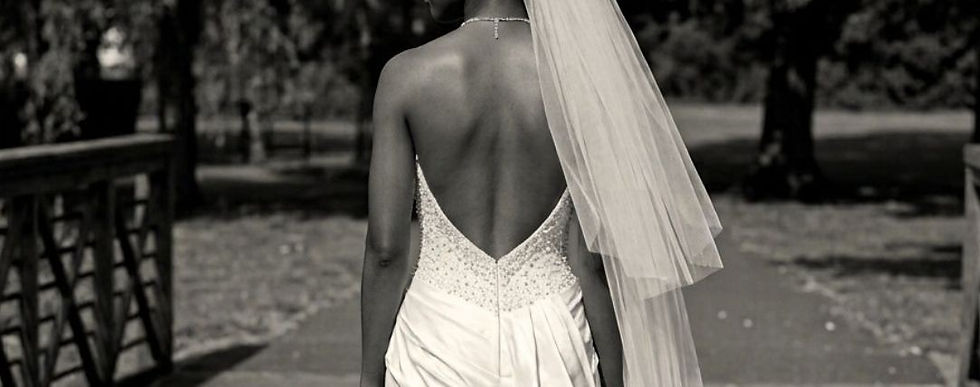
Created many years ago, her beaded backless wedding gown remains one of those commissions I still remember for the challenge it presented. It looked wonderfully effortless when finished, but achieving that simplicity tested almost everything I understood about structure, balance and support at the time.
And there, in the midst of that journey lies something I have believed throughout my career:
The quieter a dress appears, the harder its construction often has to work.
The Challenge: How Do You Support a Backless Gown?

A beautifully exposed back creates an immediate design problem.
Remove fabric from the back of a dress and you also remove part of the structure traditionally relied upon to support the front.
Caron's gown needed to expose the back beautifully while still giving her a secure, flattering silhouette.
There could be no obvious corsetry fighting against the delicacy of the design.
No visible engineering.
And no sense that she needed to hold herself differently because of what she was wearing.
The support had to disappear.
Designed From the Inside Out
This is where bespoke becomes very different from simply choosing a style.
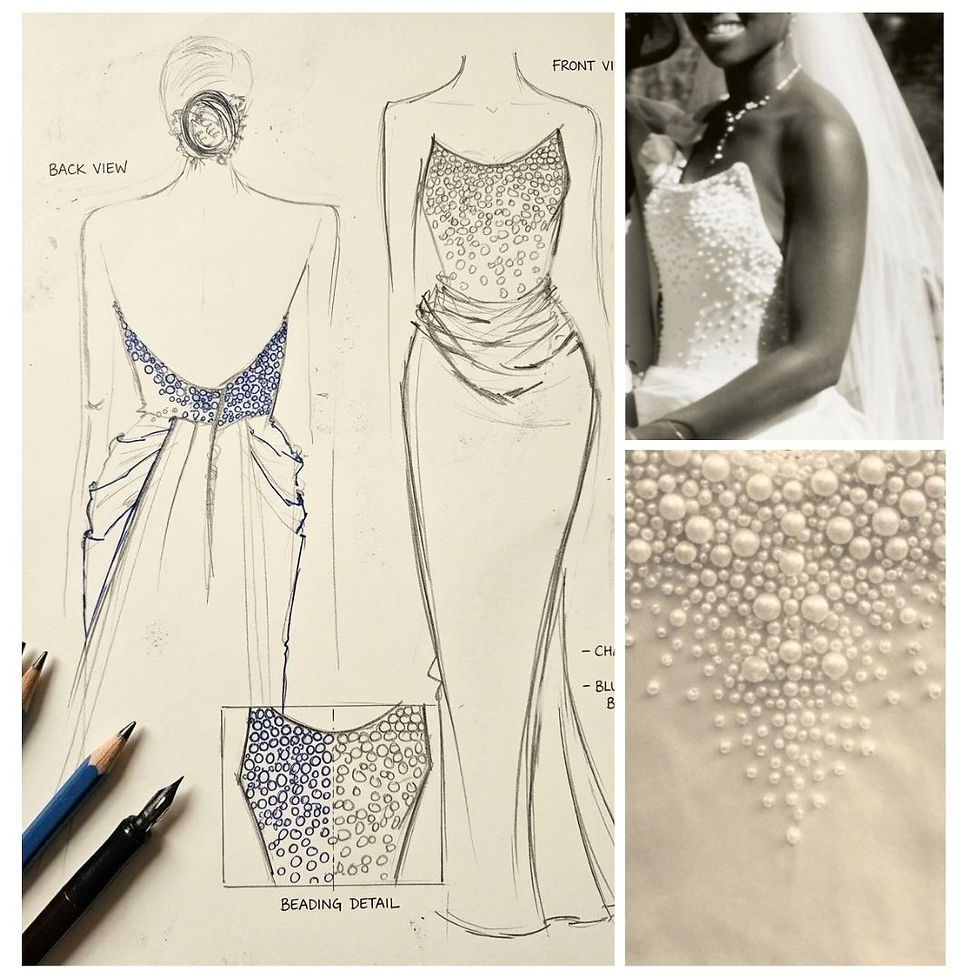
Caron's gown was individually developed around her proportions, using pure silk duchess satin - a beautifully lustrous fabric with enough body to hold sculpted form while retaining the richness associated with traditional couture.
The skirt was softly draped to flatter her petite frame, while internally the gown told an entirely different story.
Corsetry provided the foundation.
Pattern cutting controlled the balance.
The construction allowed the back to disappear without sacrificing the shape and security required at the front.
Every seam had a job to do.
Only once that architecture worked could the gown be allowed to look effortless.
The Hidden Detail
The most important part of Caron's dress was something nobody looking at the wedding photographs would ever know was there.
Its internal structure.
That is often the paradox of couture.
When the engineering is successful, you don't notice it.
You notice the woman.
The beaded back catches the eye. The silk catches the light. The draping creates movement.
Beneath it all, however, is the carefully constructed foundation making those beautiful things possible.
A Gown Made to Outlive the Wedding
Years later, Caron contacted me with a comment I have never forgotten:
“My bespoke wedding dress still looks as amazing as it did when I wore it on my wedding day 17 years ago.”
For me, that says something important about luxury.
A couture wedding dress is created for one extraordinary day, but it should never feel disposable.
Good materials matter.
Construction matters.
The work inside the garment—the parts that may never appear in a photograph—matters.
Caron's gown belongs to an earlier chapter of the CGH archive, yet the principles behind its construction remain remarkably unchanged.

A Reflection from Cynthia
Looking back at Caron's dress now, I can see many of the ideas that would go on to define my approach to couture.
Structure should support rather than dominate.
A woman's proportions should lead the pattern cutting rather than be forced into a predetermined silhouette.
And the most technically complicated work should often be the least visible.
Caron's dress challenged me.
That challenge was important.
Decades of experience are not built simply by repeating what you already know. They are built one client, one body, one difficult question and one solution at a time.
That is still how I approach bespoke today.

Begin Your Story
Perhaps you love a low or backless wedding dress but worry about support.
Perhaps you've tried beautiful gowns that simply don't work with your proportions.
Or perhaps what you want appears deceptively simple, but you haven't yet found the dress that makes that simplicity feel effortless.
That is where a bespoke conversation can begin.
Would you like more inspiring posts like this one?


Comments